What is the Tsundere trend?
"Tsundere" is a word from Japanese anime and manga fandom for a character who is cold, prickly and proud on the outside and soft and affectionate underneath. The trend turns that character type into about seven seconds of dance. The person in the clip plays the whole arc in a few beats: a cheerful start, a sudden pout, arms folded across the chest, a sharp turn away as if to say "hmph", a stomp of the foot, and then the act cracks and the smile comes back.
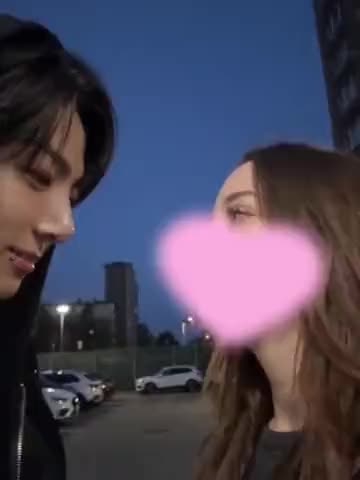
That is why it works on TikTok and Reels: everyone knows someone who pretends to be angry and can't keep it up, and the dance is simple enough to read at a glance. People post it about a partner, a friend or themselves, and the comments fill with people tagging "their tsundere". In the app the trend comes in two versions: the solo clip at home and a duo on a night street, made for two partners.
Where does the original video come from?
The song is "Cundere" by Six Before, a 2026 single; "Cundere" is the artist's spelling of tsundere. On TikTok the dance runs on a sound listed simply as "original sound", so many people find it by searching "tsundere dance" rather than the song title. The clip needs no lyrics: the moves and the faces tell the story.
The solo version on vswp follows the TikTok creator vaskaz, credited with starting the dance in early November 2026, and the wave quickly spread into couple versions filmed outdoors at night. We couldn't confirm which post was the very first, so there is no source link here.
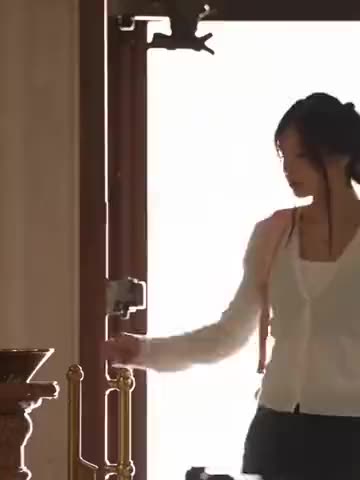
What is visible in the solo clip: a warm hallway at home with track lights on the ceiling, an oval mirror in a dark wooden frame, an antique wall clock and a carved chair with a quilted handbag on it. The dancer has long curly red hair and glasses and wears a burgundy tweed jacket with a big black bow, a matching pleated skirt, black tights and black ankle boots.
Who and what is in it?
The solo version has one person, the dancer, filmed full length by a steady phone camera:
- The dancer. Faces the camera, dances in place, then plays the whole tsundere routine: arms crossed, head turned away, a stomp, and the smile breaking through at the end. This is the role your photo goes to.
- The room. A home hallway with warm light, a mirror and old-fashioned furniture. It stays exactly as it is.
- The outfit. A school-style burgundy tweed set with a black bow. It stays if you keep the original look, or changes to your own clothes if you don't.
The duo version moves the same idea to a night street, with two people dancing it together, so both partners get their own photo.
How to make the Tsundere trend with AI
- Open the Tsundere trend and sign in with Telegram. There is no password.
- Choose the solo or the duo version.
- Give a photo (JPEG, PNG or WebP) to each person you want to replace. Anyone without a photo stays as in the original.
- Decide on "Keep the original look". On, the clothes stay as in the video and only faces and hair change; off, the look comes from your photo.
- Press "Make the free preview" to see about 5 seconds at 480p with a small "vswp.app" mark; every new user gets one.
- Press "Create the full video". The price in Telegram Stars depends on length, quality and number of people and is shown before you start; the Stars come back if a render fails or is canceled.
- Download the MP4 at 480p or 720p with the original song, typically ready in minutes, and post it.
By starting a video you confirm you have the right to use it and the photos; if it's your partner's or a friend's photo, ask them first. More clips are in the trends list.
Which photo for each role?
- Full length helps. The dancer is shown head to toe, so a full-body photo of just you carries hair, silhouette and, with "Keep the original look" off, your own outfit best. Make sure your face is still sharp and not tiny in it.
- The face. The whole joke lives in the expression: the pout and the smile that wins. A clear, front-facing photo with even light gives the most recognizable result.
- Glasses and hair. The dancer wears glasses and has long curls; your photo decides your own hair and face, so pick one that shows them the way you like them.
- For the duo. One photo per person, each showing only that person. Two separate photos work better than one photo of you together.
- The hard moments. Fast turns away from the camera and hands crossing in front of the body are the trickiest frames; if they come out odd, another take usually helps.
More tips: which photos work best for an AI video swap and recreating a trend with friends.