What is the BTS 2.0 dance trend?
It's a dance cover challenge. "2.0" is a track from BTS's album ARIRANG, and after the group showed its choreography, dancers and fans started filming their own versions: some in groups, many alone in a studio or at home. A cover like this is judged on how cleanly it follows the original, so people rehearse it for days before they post.
The clip on vswp is one of those solo covers. There are no cuts to hide behind and no partners: one person, one fixed camera and the whole body in the frame from the first beat to the last. That is also what makes it a good template, because the full choreography is visible and nothing blocks the dancer.
Where does the original video come from?
The song is "2.0" by BTS, from their fifth studio album ARIRANG, released on March 20, 2026. The album has 14 tracks, its lead single is "SWIM", and the label's announcement describes "2.0" as a song about the group's present moment of growth and transformation; V contributed to the track.
The dance spread in April 2026. BTS released a dance practice video for "2.0" in the second week of April, V posted a "2.0" dance challenge on his TikTok account on April 10, and Filipino dancer Niana Guerrero's cover on Instagram was liked by RM, J-Hope, Jimin and Jungkook, who also reposted it.
The version on vswp is a solo cover from the TikTok account @yurrri_1011, one of many made to the song. We don't link a single post as "the original": the choreography is BTS's own, and the challenge has no one first video.
Who and what is in it?
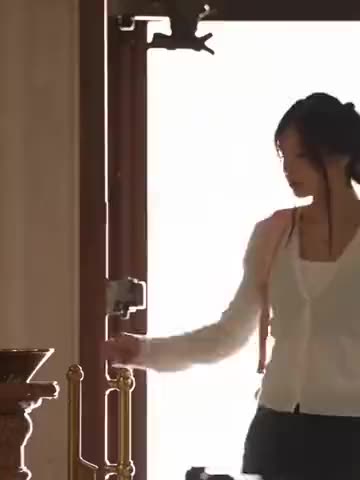
There is one dancer in the clip, and you can replace her with anyone:
- The look. Dark hair tied back, a white shirt with the sleeves rolled to the elbow, a black tie, a fitted dark gray vest and wide black trousers with a pale cloth hanging at the hip. It reads as a stage suit, close to how K-pop performances are styled.
- The place. A practice studio after hours: a black ceiling with long strips of white light, a pale curtain along the back wall, a stepladder on the left, a floor fan, a few boxes and a metal rack.
- The floor. Glossy and wet-looking, so the dancer's reflection and long shadow stretch toward the camera.
- The camera. A phone set low on the floor and left still. The dancer stays full-length in the center for the whole clip.
- The moves. The "2.0" choreography, performed solo: sharp arm work around the face and shoulders and wide steps in the loose trousers.
How to make the BTS 2.0 dance with AI
- Open the BTS 2.0 dance trend and sign in with Telegram. There is no password.
- Give your photo (JPEG, PNG or WebP) to the one dancer in the clip.
- Decide on "Keep the original look". On, the shirt, tie and vest stay and only the face and hair change; off, the look comes from your photo.
- Press "Make the free preview" to see about 5 seconds at 480p with a small "vswp.app" mark; every new user gets one.
- Press "Create the full video". The price in Telegram Stars depends on length, quality and number of people and is shown before you start; the Stars come back if a render fails or is canceled.
- Download the MP4 at 480p or 720p with the original sound, typically ready in minutes, and share it.
By starting a video you confirm you have the right to use it and the photos; ask a friend before using theirs. First time? Read how to put yourself in a video, or browse more clips in the trends list.
Which photo works best?
- A sharp, front-facing face. The camera is far enough to show the whole body, so the face is small in the frame. A clear, evenly lit photo holds the likeness at that distance.
- A full-length photo for your own outfit. With "Keep the original look" off, a full-body photo of one person carries clothes, hair and silhouette best, since the dancer is visible head to toe.
- Hair you want to see. The dancer's hair is tied back and the face is open. With the look kept, hair comes from your photo, so pick one where it sits the way you like.
- A calm expression. The performance is focused and serious; a photo with a wide laugh can look stuck on one face.
- Fast hands. The arms pass in front of the face more than once. If a frame comes out odd, another take usually fixes it.
More tips: which photos work best for an AI video swap.